
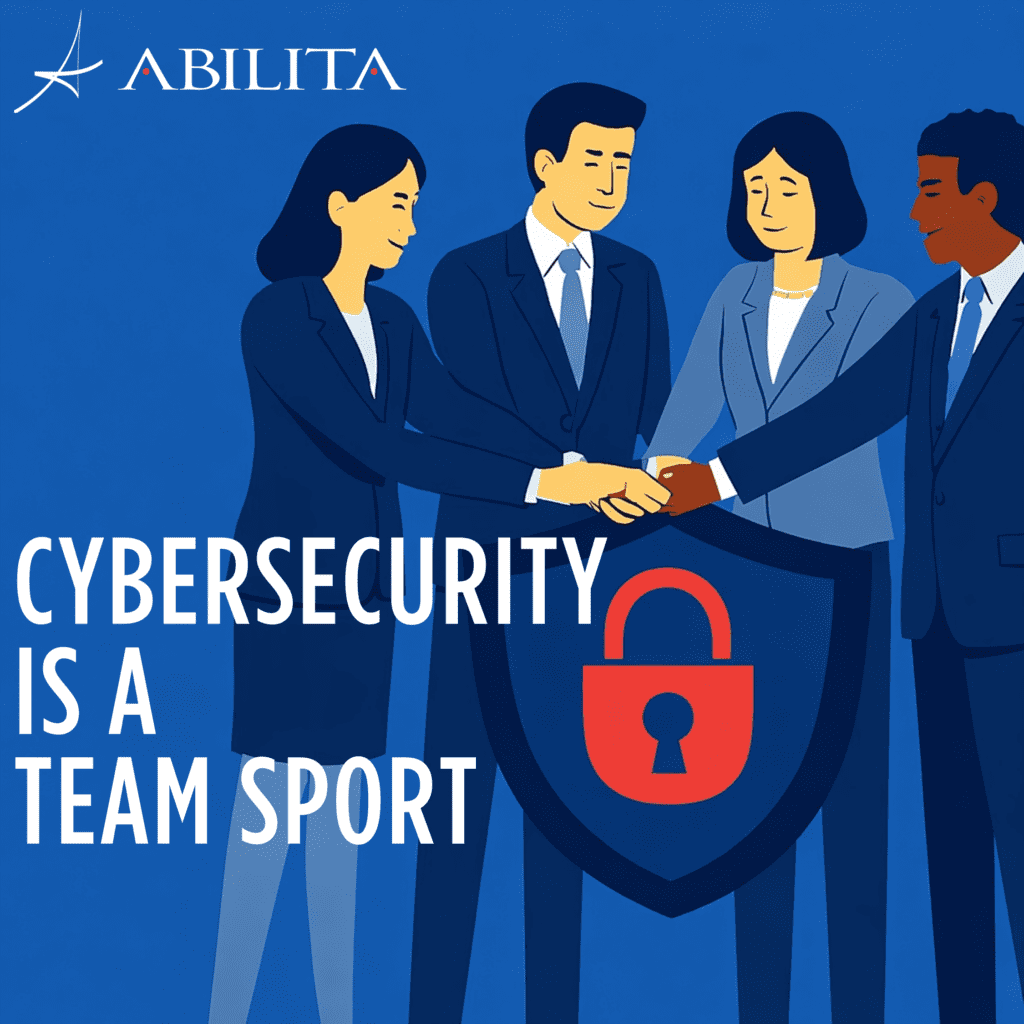
Cybersecurity is a Team Sport
When people hear the word “cybersecurity,†they often think of complex computer systems, advanced technology, or the IT department working behind the scenes. But here is the truth: you do not need to be a tech guru to protect sensitive data. All employees, regardless of their position or work location, contribute to maintaining information security.
Cybersecurity is not only about technology-it is about people, processes, and awareness. Even the most advanced security tools cannot protect an organization if its people unknowingly open the door to attackers.
Every organization, no matter the size, stores and manages valuable information such as:
- Customer records – names, addresses, phone numbers, and payment details
- Financial data – invoices, bank information, and transaction history
- Internal communications – emails, reports, and confidential discussions
- Proprietary information – designs, strategies, and trade secrets
Cybercriminals target the weakest link in the chain—and often, that is not the firewall or antivirus software, but human behavior. A single click on a malicious link or reuse of a password can be all it takes for an attacker to gain access.
Common Cyber Threats You Might Encounter
You do not have to be in IT to recognize and defend against common threats. Here are a few that everyone should watch for:
- Phishing Emails – Messages that appear legitimate but try to trick you into revealing information or clicking malicious links.
- Malicious Attachments – Files sent via email or chat that contain harmful software.
- Social Engineering – Attackers pretending to be co-workers, customers, or vendors to gain your trust.
- Ransomware – Malicious software that locks your files until a ransom is paid.
- Credential Theft – Stolen usernames and passwords that allow criminals to impersonate you online.
Simple Habits That Make You Cyber Smart
The good news? Staying cyber safe is not about mastering complex technology – it is about building a few key habits:
- Think before you click – If a message or link seems suspicious, do not open it. When in doubt, verify with the sender.
- Use strong, unique passwords – Avoid predictable words or personal details. Consider using a password manager.
- Enable multi-factor authentication (MFA) – Even if someone steals your password, MFA makes it much harder for them to access your account.
- Lock your devices – Whether you are in the office, a coffee shop, or at home, lock your screen when stepping away.
- Keep software up to date – Updates often fix security vulnerabilities attackers could exploit.
- Report security concerns immediately – Do not ignore suspicious activity—inform your IT or security team right away.
Leadership’s Role in Cybersecurity
Executives and managers set the tone for the organization. When leaders actively support security training, enforce best practices, and model good behavior, employees are more likely to take security seriously. Leadership can:
- Promote regular training to keep security awareness high.
- Allocate resources for security tools, monitoring, and incident response.
- Encourage a “see something, say something†culture so employees feel comfortable reporting concerns.
- Review and update policies to adapt to evolving threats.
Remote and Hybrid Work: Extra Precautions
With more employees working remotely, protecting data outside the office is more important than ever. Remote workers should:
- Use secure, encrypted Wi-Fi connections—avoid public networks when possible.
- Connect through a VPN (Virtual Private Network) to add a layer of protection.
- Keep work and personal devices separate.
- Store files on approved cloud platforms instead of local drives.
Cybersecurity Is a Team Effort
The reality is that cyber defense is not the job of just one department-it is a shared responsibility. Every click, every password, and every decision matters. When everyone is alert, careful, and willing to report suspicious activity, the organization’s defenses become much stronger.
Remember: You do not have to understand complex coding, encryption algorithms, or server configurations to protect sensitive information. You just need to stay alert, follow best practices, and act when something does not seem right.
Cybersecurity is everyone’s job. And when we all do our part, we make it much harder for attackers to succeed.
At Abilita, we understand that cybersecurity is not one-size-fits-all. That is why we take a consultative approach—matching you with the right provider based on your unique environment, risk profile, and goals. Let talk about how we can help you make smarter, safer decisions.